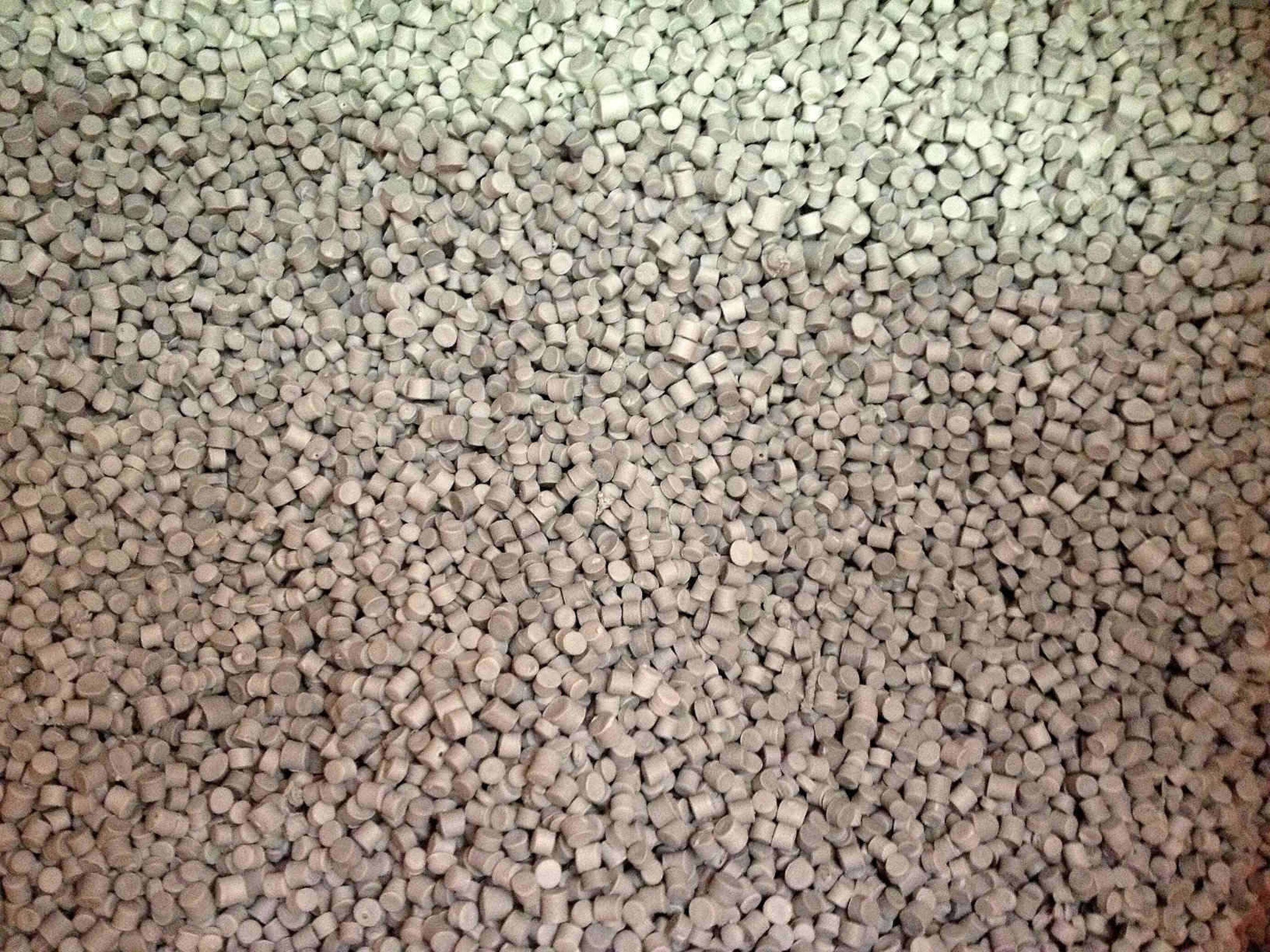






SPACERS
FROM THE BEGINNING...
Especially since the late '20s and then 30s plastics were the protagonists of countless investigations and in-depth studies such as to enable an ever-increasing application in any industry, not only at the domestic level, but at industrial level too. It is in fact materials having excellent chemical and mechanical properties, similar, maybe superior to the characteristics of other materials used for centuries, but which have the advantage of easily break down costs and be durable.
What we all commonly call plastics, how are they defined under a chemical and physical profile? These are materials which contain as essential constituents one or more polymers of high molecular weight, the substances consist of large molecules, said macromolecules, formed by the union of the stable chemical bonds, units called monomers or basic polymers. They are obtained by the process of petroleum, which originates heavy naphthas and they are worked by catalytic or thermal cracking. They produce base polymers such as elitene, propylene, methane, ethylbenzene, and others. It is possible to have finished products that they will be mark through subsequent processes and chemical processes (polymerisation).
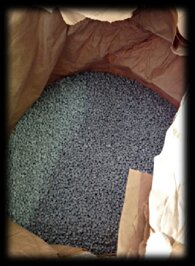
- Plastics: fall into this category: solid materials, rigid, generally characterized by a modulus of elasticity relatively high, a large tensile strength and a reduced elongation to fracture, but also as materials with considerable flexibility.
- Elastomers: polymers that can be stretched to a length at least twice that at rest, and once interrupted the effort, almost instantly return to the original length; therefore possess a low elastic modulus, high elongation reversible and a reduced tensile strength.
- Fibers: they are filaments of length at least one hundred times greater than the diameter, consist of linear molecules of high molecular weight that are obtained by stretch operation; a mechanical level they appear very flexible, tough, and have rather high breaking loads with a relatively low elongation.
Globally, all these products preserve the common properties advantageous:
- lightness
- chemical inertness
- low coefficient of friction
- low conductivity, thermal and electrical
- good optical properties
- relatively low cost, thanks to the processes of formation little expensive, the elimination process of finishing and protective coatings, and the possibility of recycling.
FOCUS ON...
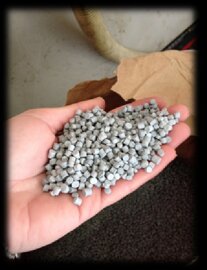
If we considerably limiting the scope of application, specifically in our industry the polymers most used are the polyethylene and polypropylene.
Polyethylene is certainly the most widely used material and constituting 40% of the world production of plastics. Through two different processes are obtained by the low-density polyethylene, used for the production of packaging films, containers and as an electrical insulator; and the high density polyethylene which may constitute thanks to the inertia chemical tanks, containers and pipes.
It is for us the more interesting treating another important thermoplastic polymer, the POLIPROPILENE, central element in the production of shims and spacers.
Obtained by polyaddition from propylene gas, it can be homopolymer, block copolymer or random.
A structural chemical level can locate a further diversification: if the substituent groups, in this case the methyl groups, are placed all on the same side of the polymer chain, it has positional isomerism that causes an isotactic structure; otherwise if you place randomly on both sides of the chain, the structure is atactic.
Under a commercial perspective the most used is the isotactic polypropylene: in fact presenting a high crystallinity, the material is rather rigid.
It determines extremely favorable mechanical properties, a high breaking load, a relatively low density, a reduced percentage coefficient of water absorption, melting temperature of 165 ° C, good insulating properties having thermal conductivity k of about 0.1-0.22 W / (m K).
THE PRODUCTION SYSTEM...
The support systems, the spacers used in various fields of civil engineering and construction, are produced using a special forming technology: INJECTION MOULDING.
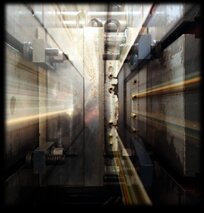
The granule material is loaded through the hopper in the injection molding machine, in the feeding zone of the rotating screw, positioned within a cylindrical duct in which are positioned at regular intervals of the resistors. Through the rotation of the screw, there is an increase in temperature which brings the material in the fluid state, after that the plasticized material is pushed into the accumulation chamber. Subsequently the reciprocating screw moves toward the nozzle and pushing the material into the mold.
In this phase of compaction it is necessary that the system is kept under pressure, so an additional amount of material is injected to fill completely the mold, thereby it compensate the volume change and the eventual shrinkage of the material.
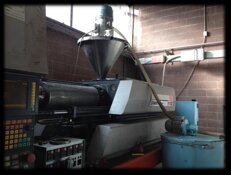
Therefore the material remains in the mold for the necessary time to the perfect solidification of the material, catalyzed by controlled cooling with jets of cold water. In this way the final phase of expulsion of the product starts: the mold is opened and the injectors present on the movable plate push the item out from the mold.
This process allows the molding of two or more figures, we obtain with only one cycle more items, that when the mold is opened they are joined by the sprue, which is nothing other than the material solidified in the injection channels.
After removing the gap, you have in your hands the individual items ready to be marketed.
SPACERS...
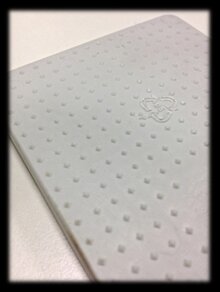
The spacers represents a fundamental entity in the phase of assembly of prefabricated structural components, such as interlocking panels, beams, columns. First it should be made clear that these devices do not perform the function of support of prefabricated structures, but respond to the need to redistribute the pressures of contact on a sufficiently large area.
For example in the assembly of prefabricated panels, spacers allow to place the entire structure on a smooth, flat surface, putting in team each constructive element. Therefore, the spacers is the main variable: there are six variants of this dimension: 2mm, 3mm, 5mm, 6mm, 10mm, 20mm, so that the thickness is achieved by overlapping the portion required.
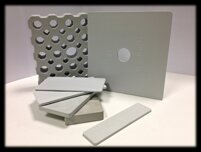
If spacers are used in relation to the vertical panels the standard dimensions of width and length are respectively 80mm and 160mm (SPACER M); otherwise when they should be placed in horizontal panels, lenght is always 160mm, but width is 40mm (SPACER MR).
The structure is much more massive when the shims are placed in the footings under the columns, in which case the support base has 200*200mm and height 40mm (MAGNUM).
Even if they are made of a "poor" material and extremely cheap, these items play a role of great significance.
EYE TO DETAIL...
In a market that offers a wide competition, we want to distinguish ourselves by investing in quality and warranty. Anyone string in his hands a plate of our production can not feel the precision that distinguishes it.

The structure is perfectly smooth, without curving or inhomogeneities. Both upper and lower surfaces are enriched by the presence of anchor points: equidistant pyramid which ensure the correct settling of superimposed loads and hinder improper runoff.
Furthermore, aware of the need to rely on a provision valid and comprehensive, we subjected the products to laboratory tests in authorities managing obtaining a certificate showing the important resistance without breaking a compression of 50 T for the plates M and MR and a certified compression of up to 100 T for MAGNUM.
EDILKOMPLAST SRL - Piazza A. Pastrello, 12/6 Venezia (VE) 30173 - P.I.: IT04466540277 - TEL: +39 0495960908 - FAX:+39 0495960908 - e-mail: info@edilkomp.com